Why Multi-Site Enterprises Are Simplifying Their Networks to Scale Faster?

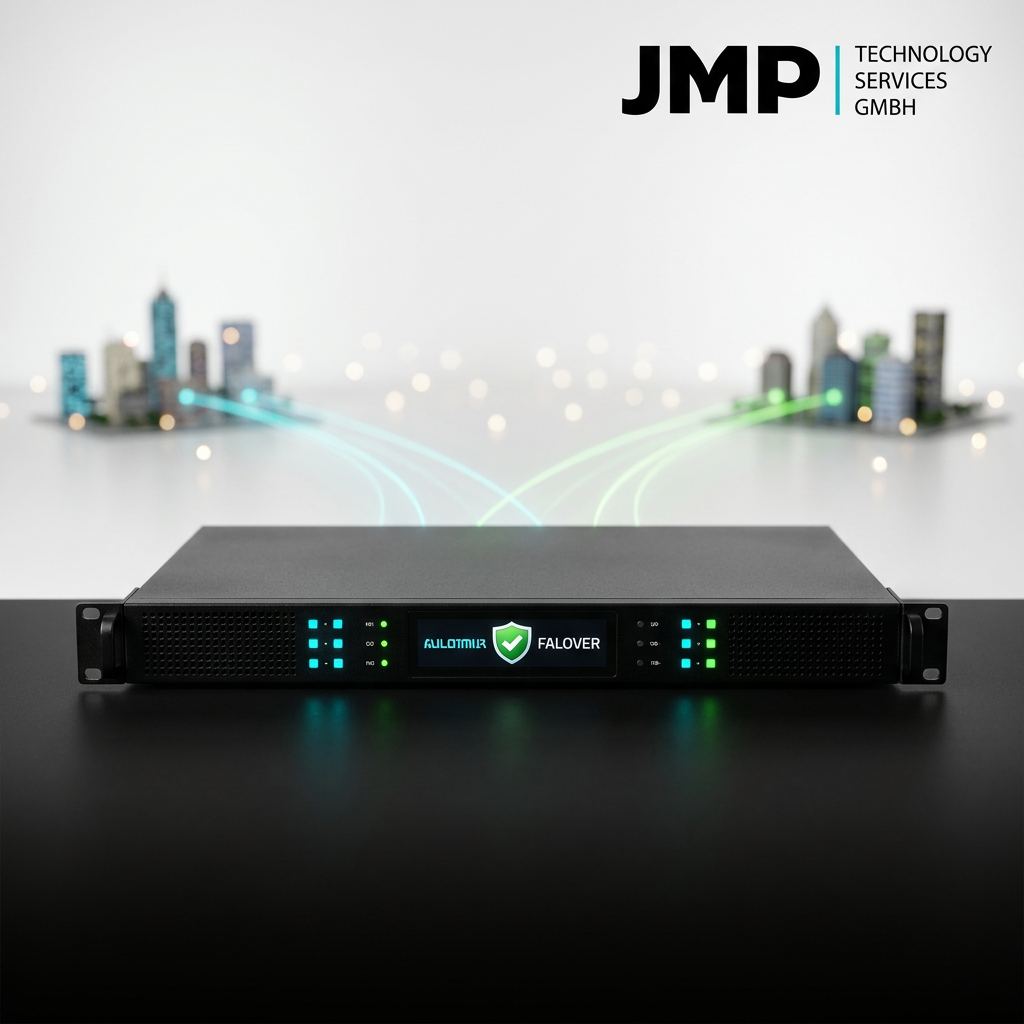
Many organizations still rely on legacy network architectures that combine MPLS circuits with standard broadband connections. While these setups may have worked in the past, they often create operational headaches as businesses expand.
Costly Site Visits
Every new location typically requires hardware installation and configuration by a skilled network engineer. If equipment fails or changes are needed later, another site visit may be required. These "truck rolls" not only increase costs but also slow down deployments and problem resolution.
Limited Visibility Across Locations
When each branch operates independently, IT teams often have to log into multiple systems just to investigate a single issue. Imagine a branch office experiencing slow access to cloud applications. Without centralized visibility, identifying the root cause can take hours of manual troubleshooting, log reviews, and coordination with local teams.
Inconsistent Security Policies
Keeping security policies aligned across dozens of locations is challenging when updates must be applied manually. A missed firewall update or delayed security patch at just one site can create a vulnerability that puts the entire organization at risk.
The Shift Toward Software-Defined Networking
To overcome these challenges, many enterprises are adopting SD-WAN (Software-Defined Wide Area Networking) and cloud-managed networking solutions. Rather than treating each branch as a separate environment, these technologies centralize management and automate many of the tasks that traditionally required hands-on intervention.
The result is a network that can be managed through software rather than constant hardware maintenance.
1. Zero-Touch Provisioning: Deploy Anywhere with Minimal Effort
One of the biggest advantages of modern networking is Zero-Touch Provisioning (ZTP).
Instead of sending an engineer to every new location, networking equipment can be shipped directly to the site. A local employee simply plugs it in and connects it to the internet.
From there, the device automatically contacts the cloud, downloads the organization's predefined configuration, and becomes operational within minutes.
Business Impact:
- Faster site deployments
- Reduced travel expenses
- Consistent configurations across all locations
- Less dependency on specialized on-site expertise
2. One Dashboard for Complete Visibility
Operational efficiency depends heavily on visibility.
Cloud-managed networking platforms provide a centralized dashboard that displays the health and performance of every branch, switch, access point, and connected device. If a connection fails or performance drops, IT teams receive immediate alerts that pinpoint the issue. Many modern platforms even leverage AI-powered operations (AIOps) to proactively identify and resolve problems, such as automatically rerouting traffic when an internet provider experiences latency or outages.
3. Centralized Security and Policy Management
Security becomes significantly easier when policies are managed centrally.
Need to update firewall rules? Deploy a new guest Wi-Fi policy? Strengthen access controls?
Instead of configuring each location individually, administrators make the change once and automatically push it across the entire network. This approach aligns closely with the SASE (Secure Access Service Edge) model, which combines networking and security into a unified cloud-delivered service.
The result is consistent protection across every location, whether it's a branch office in Tokyo, a warehouse in Chicago, or headquarters in New York.
How Modern Networks Improve Operational Efficiency
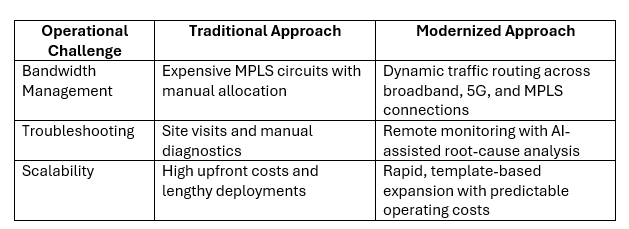
Building a More Agile Enterprise
The benefits of network modernization extend far beyond reducing IT workloads. When networks become simpler to manage, organizations gain the flexibility to respond quickly to business opportunities. Need to deploy a new point-of-sale platform across hundreds of stores? Expanding into a new region? Integrating offices after an acquisition?
A software-defined, cloud-managed network makes these transitions significantly faster and less disruptive. In today's cloud-first business environment, network simplicity is no longer just an IT objective—it's a strategic advantage. For multi-site enterprises, modernizing network infrastructure provides the foundation needed to scale efficiently, maintain consistent security, and support future growth without the operational complexity that traditionally comes with expansion.